Learn Cisco Meraki API:Create & Clone Networks via API
Introduction Rolling out a single branch office manually via a graphical interface is a manageable task. However, when tasked with deploying fifty, a hundred, or a thousand new sites, relying on manual configuration is a recipe for operational…
Read MoreMeraki API Tutorial: How to Get Your Organization ID and Network ID
When transitioning from configuring Cisco Meraki networks manually via the GUI dashboard to automating network deployments with the Meraki API, the very first hurdle is gathering your foundational identifiers. Before you can clone a site, update firewall…
Read MoreComplete Guide: FortiGate DHCP over IPsec VPN in FortiClient
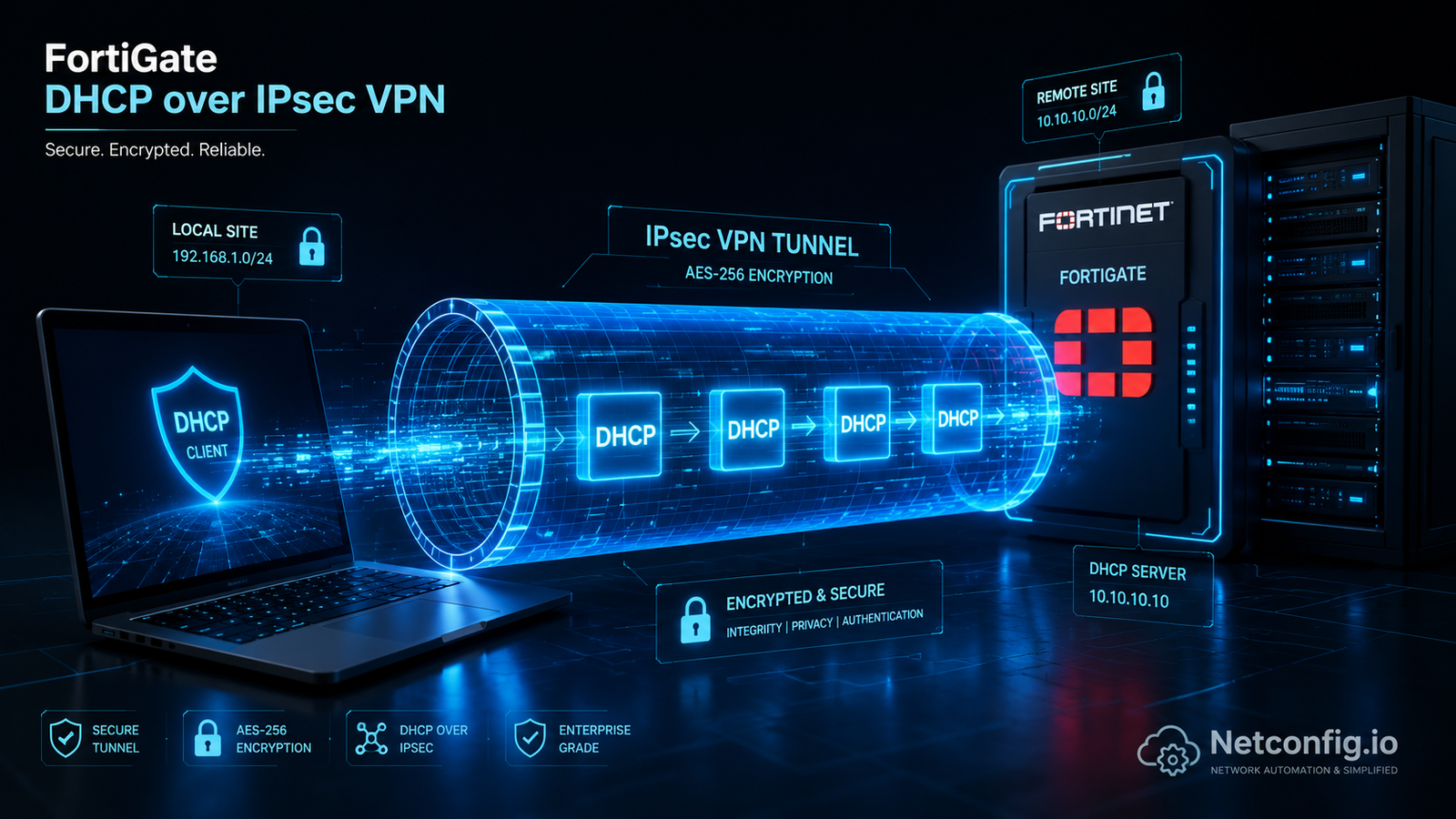
Introduction to FortiGate DHCP over IPsec VPN When enterprise network engineers deploy FortiGate Remote Access VPNs (Dial-Up IPsec), the default and most heavily documented method for assigning IP addresses to remote clients is Mode Config. Mode Config…
Read MoreFortiGate IPsec Remote Access VPN Setup Guide | FortiOS 7.x
FortiGate IPsec Remote Access VPN in modern enterprise network environments, providing secure, encrypted access for dynamic remote workforces is a foundational architecture requirement. Unlike site-to-site tunnels, a remote access (dial-up) topology…
Read MorePython NETCONF Automation with NCclient: Cisco IOS-XE Guide
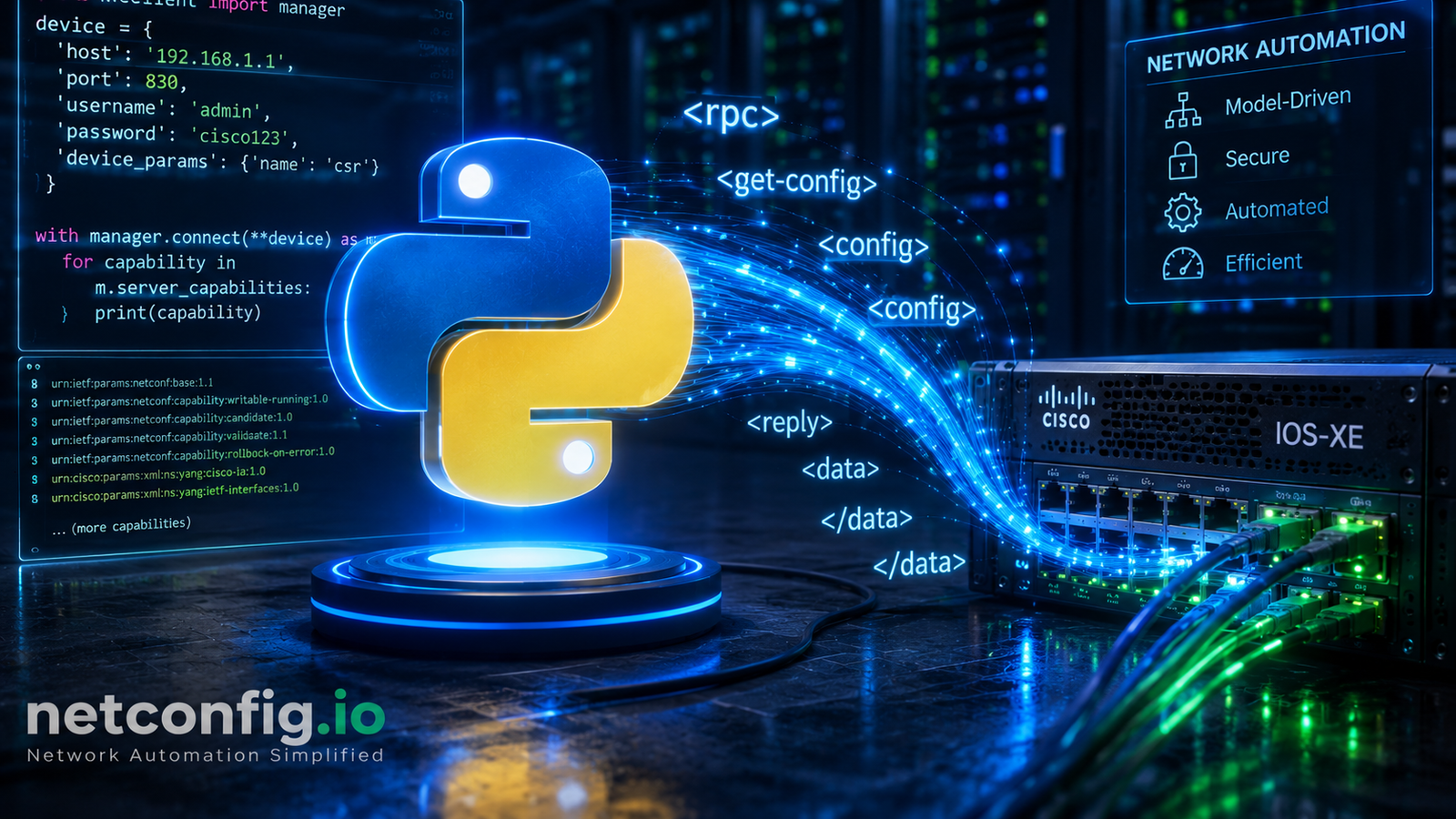
INTRODUCTION If you have spent any time writing network automation scripts using Python libraries like Paramiko or Netmiko, you are intimately familiar with the primary pain point of legacy automation: CLI screen scraping. Parsing text-based CLI outputs…
Read MoreFortiGate Web Filtering Deep Dive: Architecture & Core Engines-Part 1
FortiGate Web Filtering is an enterprise-grade security profile within FortiOS that inspects, controls, and restricts web access based on FortiGuard category ratings and static URL definitions. Operating at the network edge, it intercepts HTTP/HTTPS…
Read MoreFortiASIC Architecture Deep Dive: NP7, CP9, and SP5 Explained
Fortinet FortiASIC architecture utilizes proprietary, hardware-accelerated Application-Specific Integrated Circuits (ASICs) rather than relying solely on general-purpose CPUs.
Read More